While in womb, babies begin learning language from their mothers | UW Today

Learning starts early.

Babies only hours old are able to differentiate between sounds from their native language and a foreign language, scientists have discovered. The study indicates that babies begin absorbing language while still in the womb, earlier than previously thought.

via While in womb, babies begin learning language from their mothers | UW Today.

Posted in How Life Begins, Neuroscience and Psychology, Science and Medicine | Leave a comment

Brain deterioration, sleep woes linked – SFGate

UC Berkeley study links brain atrophy of aging with both poor sleep and poor memory retention. But the question is, does the atrophy lead to both poor sleep and poor memory directly, or does the poor sleep interfere with long-term memory storage (as it does at any age). A key paragraph:

Walker likened the waves to a chairlift that picks up new memories from the hippocampus – which can hold memories only temporarily – and escorts them to the prefrontal cortex, where they are cemented into the brains architecture. Brain scans during the morning test showed that the younger participants were relying on the cortex to recall the word pairs while the older people were still counting on the hippocampus.

via Brain deterioration, sleep woes linked – SFGate.

Posted in Neuroscience and Psychology, Science and Medicine, Sleep | Leave a comment

Why I’m taking daily ibuprofen: Could it give me more brain cells and prevent diseases of aging?

More and more, it is looking like the kind of inflammation that occurs on a daily basis, the kind you never really notice, can have serious health consequences. And there is good reason to believe that daily anti-inflammatories can be a powerful preventive.

What got me started was a conversation with a neuroscience researcher. His research looks at why neural stem cells proliferate or not–why and when the human brain makes new brain cells. It turns out that the old dogma–that we only have the brain cells we were born with–is wrong. The brain does make new brain cells throughout life, but mostly when we are young. As we get older, the number of new cells created by neural stem cells decreases to insignificance. The researcher found that the main inhibitors of neural stem cell proliferation are inflammatory molecules.

So I asked him if simply taking an anti-inflammatory like ibuprofen (Advil, etc) would let our brains produce new cells like they did when young. The neuroscientists (who I won’t name because he hasn’t published this yet) said he hasn’t done the research to show that yet, but he has created a mouse model of Alzheimer’s disease and showed that the mice taking Advil daily did not get Alzheimer’s and the control mice (which did not get Advil) did get the disease. In addition, once Alzheimer’s set in, Advil did not help. It only prevented dementia, but did not cure it.

That got me looking into more recent research about inflammation processes generally. More and more, it is looking like small, unnoticed inflammation raises the risk of all sorts of disease. Researchers have long know that chronic stress is not good and can cause disease. Now it looks like at least one mechanisms of this is that chronic stress downregulates the glucocorticoid receptor, which then cannot modulate the inflammatory response as well.

It has long been known that a daily aspirin can lead to much lower heart disease risk. The thinking was that aspirin’s ability to stop platelets from sticking together was able to keep clots from forming. Now it is looking like aspirin may in large part be reducing cardiovascular risk by inhibiting the inflammation that helps produce atherosclerosis in the first place.

How many diseases are made worse by inflammation? The very small risks of taking a daily anti-inflammatory seem very small compared to the potential benefits.

Chronic stress, glucocorticoid receptor resistance, inflammation, and disease risk.

 

Posted in Brain Hacking, Diet and Exercise, Science and Medicine | Leave a comment

Stanford experiment shows that virtual superpowers encourage real-world empathy


Some might think that giving people the illusion of greater than normal power would make them more egotistical and self-serving, but this Stanford study shows that what people become is more empathetic. This is in line with the idea that most people become more selfish when the feel less powerful and when resources are scarce, and more giving when they feel more powerful and less vulnerable.

Stanford experiment shows that virtual superpowers encourage real-world empathy.

Posted in Brain Hacking, Neuroscience and Psychology, Science and Medicine | Leave a comment

Learning to love cereal was key to the evolution of dogs – The Washington Post

How dogs evolved. Interesting science.

A team of Swedish researchers compared the genomes of wolves and dogs and found that a big difference is dogs’ ability to easily digest starch. On their way from pack-hunting carnivore to fireside companion, dogs learned to desire — or at least live on — wheat, rice, barley, corn and potatoes.


Learning to love cereal was key to the evolution of dogs – The Washington Post.

Posted in Science and Medicine | Leave a comment

Insight: Evidence grows for narcolepsy link to GSK swine flu shot | Fox News

Narcolepsy perhaps caused by a swine flu vaccine–this is one scary vaccine tale that has some scientific backing.

Emelie is one of around 800 children in Sweden and elsewhere in Europe who developed narcolepsy, an incurable sleep disorder, after being immunized with the Pandemrix H1N1 swine flu vaccine made by British drugmaker GlaxoSmithKline in 2009.

Finland, Norway, Ireland and France have seen spikes in narcolepsy cases, too, and people familiar with the results of a soon-to-be-published study in Britain have told Reuters it will show a similar pattern in children there.

via Insight: Evidence grows for narcolepsy link to GSK swine flu shot | Fox News.

Posted in Current History, Science and Medicine, Sleep | Leave a comment

Add a blog and blogging to your to-do list

A really nicely stated case for the benefits of blogging. As I have often said, the internet, which everyone said would destroy writing, is actually going to save it.

You need to blog to differentiate yourself well beyond your credentials and your experience. You need to blog to allow people to get to know who you are and what matters to you.

via Add a blog and blogging to your to-do list | Socialmedia.biz.

Posted in Publishing and Journalism | Leave a comment

Notre Dame’s failure of communication

The strange, sad story of Manti Te’o gets sadder and stranger, but what seems clear to me right now is that Notre Dame did a very poor job of handling things. They seemed to think the situation was important enough to hire a team of investigators to get to the bottom of it all, but then decided to step back and that it was “Te’o's story to tell.” Any communications professional should have strongly counseled their student athlete to get the whole story out there as soon as possible, and to be there with him to help him through the public revelation. By not doing so, they failed basic crisis management, making Te’o and themselves look bad. Of course they end up having the press conference they should have had in the first place, but by doing it in a reactive rather than proactive way they look like they are hiding something. And perhaps they are.

Manti Te’o Hoax Disclosure Was Up to Him, Notre Dame Says – NYTimes.com.


Posted in Current History, Publishing and Journalism | Leave a comment

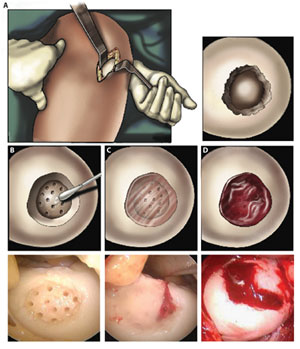
Light-Activated Hydrogel Repairs Cartilage (photonics.com | Jan 2013 | Research & Technology)

This may actually be the best solution I’ve seen so far for cartilage repair because it addresses one of the gaps in current care. The article explains the problem with current therapy:

Microfracture — a surgery in which tiny holes are punched in a bone near the injured cartilage to stimulate a person’s stem cells to emerge from bone marrow and grow new cartilage atop the bone — is the standard of care for cartilage repair, but for holes in cartilage caused by injury, the procedure often either fails to stimulate new cartilage growth or grows cartilage that is less hardy than the original tissue.

Tissues sometimes repair holes, and sometimes scar them over. A gel scaffold can convince the cells that they can successfully repair the tissue instead of producing scar tissue.

via Light-Activated Hydrogel Repairs Cartilage (photonics.com | Jan 2013 | Research & Technology).

Posted in Diet and Exercise, Science and Medicine | Leave a comment

Zombie consciousness

219581402_4cd89ec4cc_mWish I had time to go to this talk:

Thursday Jan 17th, 5 pm: Workshop on Zombies and Consciousness

Steven SchlozmanPsychiatry, Harvard Medical School

Is it OK to shoot that Zombie if it isn’t Consciously Human? Is it OK to shoot that Zombie if it isn’t Humanly Conscious? And How Can I tell the Difference?”

Abstract:

In this presentation, we will discuss the construct of the cinema zombie as means by which we can address fundamental issues of how we view what is permissable among humans, among conscious humans, and ultimately among things that we consider living or not living.  The cinema zombie presents an ideal substrate for these thorny ethical issues, and, given new developments in neuroscience, we can use what we scientifically understand about the experiences of self and other to desconstruct the rules and natural history that appear to govern the modern trope.

Dr. Steven C. Schlozman is Associate Director of the Residency Training Program in Child and Adolescent Psychiatry for Massachusetts General Hospital and McLean Hospital.  He also co-directs Medical Student Education in Psychiatry at Harvard Medical School, where he is an Assistant Professor of Psychiatry. Dr. Schlozman writes short fiction and has published one novel, The Zombie Autopsies.  This novel has been optioned for film adaptation by George Romero, creator of Night of the Living Dead.

Photo: Scott Beale / laughingsquid.com.

Posted in Neuroscience and Psychology | Leave a comment