Banning super-sized soft drinks

New York City is banning large sodas and soft drinks. Whatever you think of the government stepping in or not to protect people from themselves, people should definitely keep away from these large sodas. Even more than a lack of exercise, I think the constant drip-feed of calories throughout the day is most responsible for the obesity epidemic. The body forgets how to cope with hunger, how to harvest stored fats. And when the biochemical pathways are full, that is when you get more fat deposition and the creation of toxic byproducts. 

Posted in Diet and Exercise | Leave a comment

Ann Patchett says “it’s not over” for bookstores

Author Ann Patchett has opened a bookstore in Nashville, a city of 630,000 that previously had no bookstores left. In this video from the BBC, Patchett talks about something that I have also argued: that although chain bookstores may be dead or dying, independent bookstores can thrive because of their ability to build personal relationships and to specialize. Ultimately, I think that even Patchetts bookstore will need to become more than a bookstore–more like a museum, a coffeehouse, a meeting place, a lecture hall, an art gallery, a home design center–in order to survive. But for now, independent bookstores like hers can do well.

Posted in Publishing and Journalism | Leave a comment

Regarding prostate cancer, US government recommends you plug your ears.

Well, the United States Preventative Services Task Force (USPSTF ) has officially proclaimed that the harms of prostate screening outweigh the benefits. Why does this put me in mind of this humorous DirectTV commercial?


When you have cable and can’t find something good to watch, you get depressed …

when you get depressed, you attend seminars…

when you attend seminars, you feel like winner …

When you feel like a winner, you go to Vegas …

When you go to Vegas, you lose everything …

And when you lose everything, you sell your hair to a wig shop.

Don’t sell your hair to a wig shop.  Get rid of cable and upgrade to DirectTV

The reality is that the PSA test is a simple blood test, and there are almost no potentially serious harms from a blood test. No, the harms that the USPSTF talks about—internal bleeding, incontinence, impotence—are all potential complications of steps you may take far down the road. If you get a PSA test and the numbers are high, you may decide to get a biopsy (or you may decide to get another test at some later time). If you get a biopsy it may show nothing, or it could indicate cancer in early or later stages. If the biopsy indicates cancer, you may decide to have it treated, or you may decide on “watchful waiting,” since prostate cancer grows so slowly and it may not be necessary to treat it at this time or ever.

But in the mind of the USPSTF, men are like the guy in the commercial—if we watch cable we will end up broke and selling our hair in Vegas. If we get a PSA test we will inevitably end up wearing a diaper, so don’t get that PSA test.

The fact is that we know a lot more now about the risks and benefits of prostate screening and treatment. The very information that the task force is basing its decision on is changing the calculus that men go through in deciding how to proceed. Much of the data about the risk benefit ratios also comes from the time before this information came out, when men were very likely to automatically get prostate surgery.

I would bet that in ten years, partly as a result of new information, the risk-benefit calculation will look very different, especially if you only look at younger men in their 40s and 50s (I love that my cohort counts as “younger men” when talking about prostate cancer). But instead of encouraging these changes, the task force has decided that it is better not to know anything, that it is better for men to stick their heads in the sand or stick their fingers in their ears on the subject of prostate cancer.

Posted in Science and Medicine | Leave a comment

Glass-Steagall again, at last

I’m really happy to see that there is finally a push among some with influence to revive Glass-Steagall regulations that separate FDIC-backed deposits from Banks’ speculative investments. Look, it seems really simple to me: if you are a bank and you want FDIC insurance covering your customers’ money against loss, you have to accept regulations that keep you from taking undue gambles with that money. If you want to invest the bank’s money freely, then do it without the FDIC. Of course banks what it both ways–government guarantees on deposits as well as the ability to invest freely. I would like to be able to go to Las Vegas and play roulette with the understanding that my parents would pay for any losses, but I would get to keep any winnings. But that is neither realistic nor responsible. Time to bring back Glass-Steagall and making retail banking boring again, so that investment banks can engage in wild and unfettered capitalism.

Posted in Current History | Leave a comment

End of the Clovis people theory

In the New York Times there is a good summary of long illness and finally terminal coma of theory that the first Americans were the Clovis people, who theoretically travelled an ice-free corridor from Asia down into the Americas. The Clovis people had distinctive spear points, and were thought to have first come to the continent around 13,500 years ago.

But there has long been evidence that there were far older peoples who settled the Americas, perhaps as long ago as 20,000 years. The resistance to that idea is, I’m sure, partly based on academics’ general reluctance to change views that they have built lives and careers on for decades. But I think there is also a reluctance to see primitive people as naturally adventurous explorers who might very well take to the ocean and move along the coast or cross large bodies of water like the straights between Australia and Asia. I think that humans have always had those qualities, and produce geniuses every generation (whether the ideas of those geniuses “take” is another matter, but they are there).

So there is general agreement now that the Clovis peoples were not the first, and probably not even the second, culture to settle the Americas. I think there is some pretty intriguing evidence that there may have been an early immigration from Europe, too, although those European genes didn’t survive in the American population into the historic period.

Next up: could life on earth have been seeded from life on other planets, pieces of which travelled through space? Most experts say the odds are too slight, but the universe is a big place and it has been around a long time.

Posted in Science and Medicine | Leave a comment

HDL Cholesterol not protective?

The NY Times has an article about a study looking at whether HDL is truly protective against heart disease or whether it is just a sign. I’m glad to say that high HDL (the “good” cholesterol) is a sign of better heart disease risk–I’m glad to say that because I have fairly high HDL. The only question is whether the lowered risk of heart disease is caused by the higher HDL, or if the lowered risk for heart disease and the higher HDL are both byproducts of some yet unknown factor. In the study, they looked at genes that affected HDL level, and found that the genetic differences had no effect on risk. What this says to me is simply that they are not looking at the important genes, the ones that both lower heart disease risk and also raise HDL levels.

The question is important because pharmaceutical companies are now developing drugs to raise HDL, with the hope that this will lower heart attack risk in the same way that drugs that lower LDL levels lower heart attack risk.

At the end of the article there was an example of the unhelpful literalism that doctors sometimes display.

Dr. Kathiresan said there were many things HDL might indicate. “The number of factors that track with low HDL is a mile long,” he said. “Obesity, being sedentary, smoking, insulin resistance, having small LDL particles, having increased cholesterol in remnant particles, and having increased amounts of coagulation factors in the blood,” he said. “Our hypothesis is that much of the association may be due to these other factors.”

“I often see patients in the clinic with low HDL levels who ask how they can raise it,” Dr. Kathiresan said. “I tell them, ‘It means you are at increased risk but I don’t know if raising it will affect your risk.’ ”

When asked by patients with low HDL how they can increase their HDL levels, the doctor basically says “it may not help you,” instead of saying “you can increase your HDL by losing weight, exercising more, stopping smoking,” etc.  All those things will increase the patient’s HDL and help him lower his risk.

Posted in Diet and Exercise, Science and Medicine | Leave a comment

Skateboard thrills

Wow, pretty cool.

via BoingBoing


Posted in Adrenalin | Leave a comment

Does exercise make you more or less hungry?

The NYTimes has a short entry about research on this question, which is one that has interested me for a while. Do people feel hungrier or less hungry after exercise (and why)?

I have long been curious about his and have asked a lot of people which way they go. The answer is that it seems to be very much dependent on the individual. About half the people I ask get hungrier, and half feel less hungry. I feel less hungry. If a workout is really, really intense, I actually feel a little nauseous. The researchers cited in the NYTimes article seem to think the reasons are found in the brain, but I think there is a neural conversation that happens between the gut and the brain on this issue.

Posted in Diet and Exercise, Neuroscience and Psychology | Leave a comment

Bees go to the pharmacy when sick

Interesting report out of North Carolina. Bees apparently bring anti fungal and antibacterial plant resins back to the hive when there is an infection.

Posted in Science and Medicine | Leave a comment

The link between imagination, sickle cell anemia and human success

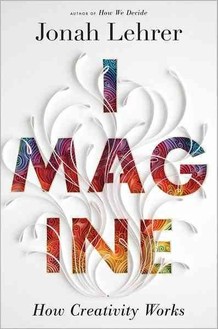
On a beach run this morning I was listening to the Fresh Air interview with Jonah Lehrer, author of the book Imagine, which discusses how we get creative insights. Lehrer’s ideas about the nature of the creative process made me think about sickle cell anemia, and perhaps why a few cases of manic depression are the price of success for the human species. I know–weird linkage–but I will explain.

Lehrer describes how moments of insight happen when people are relaxed, when they are not trying (in the shower, staring at the clouds, etc). They often happen after people have done a lot of hard work or thinking, but when they have stopped trying or have given up on finding a solution. They are usually moments of openness and exhuberance (people in one study were most creative if they imagined themselves as seven year olds). But in order to turn those insights into something concrete, people have to turn back on the hard work and focus.

The first qualities–openness, optimism, energy, exhuberance–are common to states of hypomania. The second qualities–attention and focus, ability to work long and hard–are increased when people are told stories or shown pictures that make them a little sad or blue. Lehrer notes that Kay Redfield Jamieson and others have documented the relationship between manic depression and creativity, and says that this may be so because the swing between openness and energy on the one hand and focus and doggedness on the other recapitulates the creative process. But this works only if the swings aren’t too extreme. If someone has blatant mania, they are psychotic, believing things that are patently absurd (one manic real estate agent thought he could buy and sell whole countries). Frank depression is debilitating, even paralyzing, because the mind is focused intently only on the worst outcomes.

But if someone can swing between hypomania and very slightly anxiety, he or she may be able to have the best of these conditions without the biggest downsides. This kind of person may be much more creative and successful than his or her peers.

And this is where I think about malaria and sickle cell anemia. Malaria is a terrible disease that kills a large proportion of those infected, and is a chronic affliction for those it doesn’t. In areas of Africa where malaria is endemic, many people have a single copy of a gene that makes red blood cells resistant to the malaria parasite. This is a good thing. But if someone has two copies of the gene, their red blood cells can turn rigid and flip into a sickle shape that can clog small blood vessels, causing illness or even death. This is not a good thing. By the rules of genetics, though, most people in an area with endemic malaria will have one copy of the gene rather than two, leading to a net benefit for the population as a whole.

To me this looks like a nice model for genes that contribute to manic depression. If someone has none of these genes, they are likely to be unimaginative and complacent. The full complement of genes leads to frank bipolar illness and, often, early death by suicide or misadventure. But if these gene are floating around a population, most people will have only some of them, pushing the population as a whole to have those excited, open moments that characterize inspiration and the dogged, focused moments that result from light anxiety. There is no good animal model of bipolar illness, and the reason may be that it depends on genes that have been crucial to the unique imaginative qualities that make the human species more successful than all others.


Posted in Brain Hacking, Neuroscience and Psychology, Play, Uncategorized | Leave a comment