
Risk Management: The underestimated cost of Lyme disease

The New York Times Magazine has an article on Ina Drew, who was supposed to oversee trading operations at JP Morgan and was reportedly a great risk manager. But her unit lost $5 billion. To me, the underplayed role in all this was Lyme disease. The article mentions she had it, and that she was out of work for a while. But I think that people don’t understand how serious Lyme can be, and when it’s mentioned in the article and when people talk about the episode it seems like she had the equivalent of the flu or mono. But it seems she was not nearly on top of her game because she had been seriously, seriously ill and was still feeling the effects. Everyone underestimate the risk of her health position.
Posted in Current History, Science and Medicine, Uncategorized | Leave a comment

Selling exercise

How to convince people to exercise? People need it, but most people don’t do it. A study says that we are marketing it all wrong. Forget exercise to lose weight, be healthier, or live longer. Try telling people exercise will make them happier and increase their well-being, says a study.

Posted in Diet and Exercise, Science and Medicine | Leave a comment

Lack of exercise is not the cause of the problem (but it is part of the solution)

Yet more evidence that a lack of exercise and energy expenditure is not the cause of the epidemic of obesity. This is part of the evidence that simply exercising more is not the answer to losing weight or reducing the risk of diabetes, metabolic syndrome, etc.  Calories are at the heart of the obesity epidemic, and I’m convinced that a large part of the problem is that people are used to keeping a consistently high level of glucose in the bloodstream through constant snacking and drinking sugary beverages (even sweet coffee).

Which is why lack of exercise is not really the root cause of obesity (although it a root cause of cardiovascular disorders), but it is part of the solution for dealing with metabolic syndrome and obesity. By training your body how to handle periods of low blood sugar that exercise induces, you are better able to handle the fasting that we should all be doing between meals, and better able to stop eating when we have eaten enough calories.

Posted in Diet and Exercise, Science and Medicine | Leave a comment

Running on the beach

A nice Well Blog piece about running in sand. Definitely fun and definitely a work out in the soft stuff. Having grown up in Santa Cruz, I have thought and experimented a lot with figuring out the most efficient stride.

Posted in Diet and Exercise | Leave a comment

A calorie IS just a calorie

A nice interview in the NYTimes today with a Rockefeller University researcher who has been studying obesity for decades. The key point he makes, which people must understand as a baseline for a discussion of diets, is that ultimately a calorie is just a calorie, whether you get it from proteins, fats or carbs.

Perhaps the most important illusion is the belief that a calorie is not a calorie but depends on how much carbohydrates a person eats. There is an inflexible law of physics — energy taken in must exactly equal the number of calories leaving the system when fat storage is unchanged. Calories leave the system when food is used to fuel the body. To lower fat content — reduce obesity — one must reduce calories taken in, or increase the output by increasing activity, or both. This is true whether calories come from pumpkins or peanuts or pâté de foie gras.

To believe otherwise is to believe we can find a really good perpetual motion machine to solve our energy problems. It won’t work, and neither will changing the source of calories permit us to disobey the laws of science.

So there are no “Good calories and Bad Calories” in the sense of how those calories influence your weight directly. What Gary Taubes and other are talking about is the effect of calories on the mind. Certain kinds of foods make it easier to eat fewer calories, and some make it harder. But in the end, eating 500 “bad” calories is not going to make you put on any more weight than eating 500 “good” calories.

It’s like the old riddle: what weighs more, a pound of rocks or a pound of feathers?

Posted in Diet and Exercise | Leave a comment

Simpleminded science questions worthiness of family dinners

In the Sunday Review section of the NY Times, there is an opinion piece about a study that questions whether family dinners are overrated. All previous studies show that kids in families that eat dinner together regularly are more socially and academically successful, and have fewer problems. These researchers then control for factors such as

the quality of family relationships, in activities with a parent (a tally of things like moviegoing and helping with schoolwork), [and] in parental monitoring (things like curfews and approving clothing)…

Guess what? When you control for factors like this and family resources (such as income), it cuts the correlation in half. The problem with this is that all these things (except for family income) are things that may themselves be a product (in part) of spending more time having dinners together. It’s like a study of whether sitting in a classroom every day makes students more successful, and then tossing out the data from students who pay attention, do their homework, and are respectful to others. Gee, it turns out that for students who are inattentive, don’t do homework and are disrespectful, sitting in a classroom every day doesn’t help them much at all. Of course, in the process of doing this sort of study you have tossed out the data about students who, as a result of sitting in the classroom every day, have learned how to become more attentive, do homework and be more respectful of others.

The authors conclude that simply having dinner together is not a panacea, and that you should find other ways to engage with your kids if you can’t do that. My reaction to that is, on the one hand, “well, duh.” It is the engagement and caring that matter, not simply spending time together. If family interactions are generally toxic, I could see that forcing more interactions around the dinner table could even be harmful.

So yeah, family dinners aren’t a magic fix, but they very much are a natural forum where kids can  learn to pitch in (setting the table, cleaning up, etc.–the original “home work”), be more attentive and be more respectful to others. If you give that up, you have to work pretty hard to create a similar arena for regular, all-round engagement and development.


Posted in Current History, Science and Medicine | Leave a comment

MIT camera records subtle changes in motion, color

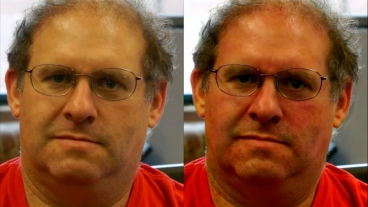
This is an interesting story (via BoingBoing) of a new video technique from MIT that records very fast, subtle changes in motion or color from frame to frame, allowing you to see someone’s pulse or see the flush of blood to the face with every heartbeat. Since we humans use very subtle changes in as markers of someone else’s emotional state, technology like this could give people an even more effective window into someone else’s state of mind. Or it could do the same for computers analyzing video of thousands of people in a crowd.

Posted in Science and Medicine | Leave a comment

Testing female athletes for “excess” testosterone

I see that the official international rules regarding who can and can’t compete continue to get more ridiculous. First, there was the ruling that Oscar Pistorius could run on prosthetic legs because no one could prove that he had any advantage. This despite the fact that there was evidence that he had an advantage-and then where do you draw the line against any mechanical help? Now they propose to test female athletes and not allow them to compete if they have “too much” testosterone, even if they come by it naturally and are not taking pharmaceutical help.  Women, I suppose, must be sufficiently feminine in order to compete.

You can’t get around the fact that all elite athletes are freaks of nature in some way. They all have natural advantages that most of us will never have, no matter how hard we work at it. Once you start down the road of deciding to allow mechanical assistance if it only brings you up to elite level, or disallow natural biological characteristics that give you greater advantage, you might as well make every event a “handicap,” like in horse racing, and make really good athletes carry bags of sand to even out the competition. (Or let me take enough steroids or testosterone to bring me up the the natural level that elite athletes have.)

Since before the original olympics, humans have watched athletic competitions because athletes are blessed by the gods, they are freaks of nature. We are well on the way to giving grades for effort, awarding the medals not to the best but those who try the hardest.

Posted in Current History, Diet and Exercise, Science and Medicine | Leave a comment

Telomeres in sperm lengthen with age

This BBC report is fascinating. As you get older, the protective caps at the end of the chromosomes, called telomeres, generally shorten. When they get short enough, the chromosomes stop dividing and cells stop replacing themselves. Except in sperm. They lengthen as you get older, and that larger cap is passed on to every cell in your children’s body.

The upshot is that older sperm can create longer-lived children, apparently. This may be one of many mechanisms by which older parents (who must live in a safer world) give birth to children who are built to thrive on long-term abundance, whereas if life is nasty, brutish and short we are biologically primed to more ready to fight and to reproduce early.

Posted in Science and Medicine | Leave a comment

“Evils” of sugar roundup

In the Guardian there is a nice summary of the ideas about how sugar, not fat, causes obesity. I am in agreement. As always, I would like to point out something that many (such as Lustig) gloss over or outright mislead about. Sugar itself does not seem to be harmful. It is only the constant infusion of sugar, and the lack of satiety (and therefore overeating) that sugar produces that cause problems. Sugar makes people inclined to eat more calories, but doesn’t itself cause weight gain.

Sugar is not inherently evil, despite the public portrayal. You don’t need to cut sugar out of your diet, but doing so makes it easy to lose weight because so many things have sugar and you end up having to avoid most foods. In the end, calories are what really matter.

Posted in Diet and Exercise | Leave a comment